
Printed Hoodies: Map the Pocket and Zip Breaks
Approve a printed hoodie by marking where pockets, a front opening, seams and the hood interrupt the visible design. Keep the selected garment reference beside the artwork file and review the assembled sample from several angles. A flat front illustration cannot establish how the design will appear with the hood resting down or the zip open.
A clothing buyer can approve a graphic and still leave its relationship to the garment unclear. Hoodies add several features that can cover, divide or distort the visible composition. Xiangrong’s apparel catalogue includes pullover, zip-front and drop-shoulder references. Use those actual shapes to define an artwork review rather than assuming that one layout will transfer unchanged between every hoodie style.
Select the garment before approving the front layout
Start with the exact product reference and identify whether the sample is a pullover or has a front opening. Mark the pocket area and where the neckline joins the hood. Keep those garment features visible in the artwork brief. A layout placed on an empty rectangle leaves the supplier to infer how it relates to the finished item.
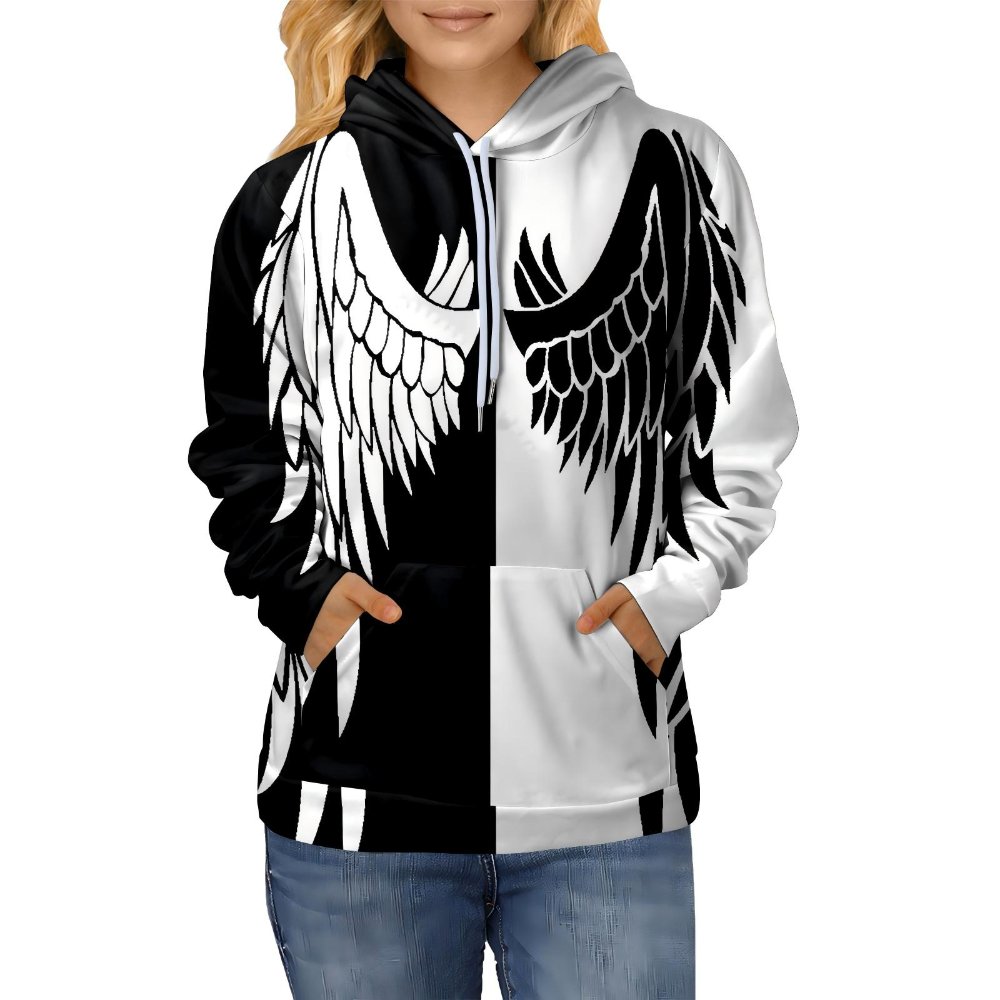
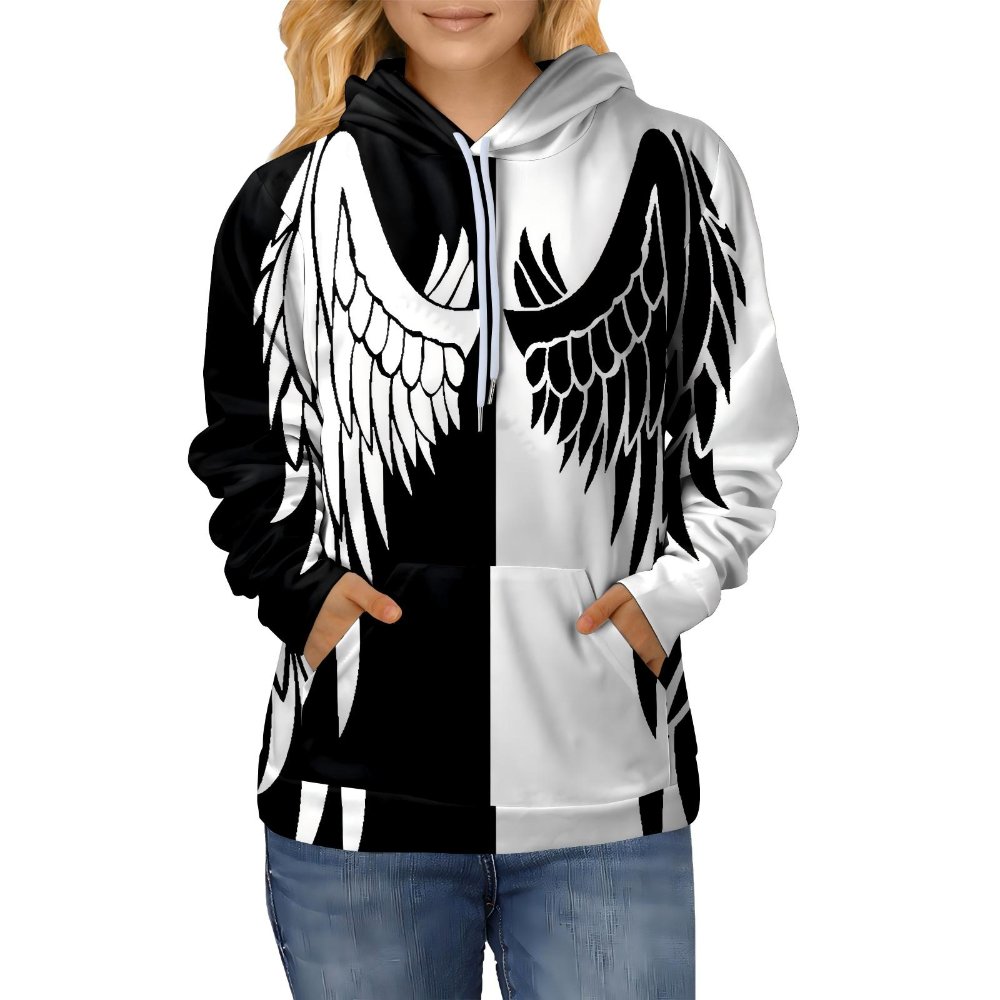
The women’s hooded sweatshirt image shows a front pocket, drawstrings and a contrasting wing composition. Treat it as a catalogue design reference. It does not demonstrate an available production method or establish the alignment tolerance that a new artwork enquiry should request.
- Mark pocket, opening and seam locations on the chosen garment.
- Specify the main viewing direction and covered areas.
- Approve a physical sample against one artwork revision.
Decide what happens at pockets and the front opening
Describe which motifs must remain visible and which can be interrupted by a pocket or opening. If continuity matters, show the intended relationship across the relevant areas and ask the supplier what can be achieved on the selected garment. If it does not matter, make that decision explicit instead of leaving several teams to interpret it differently.
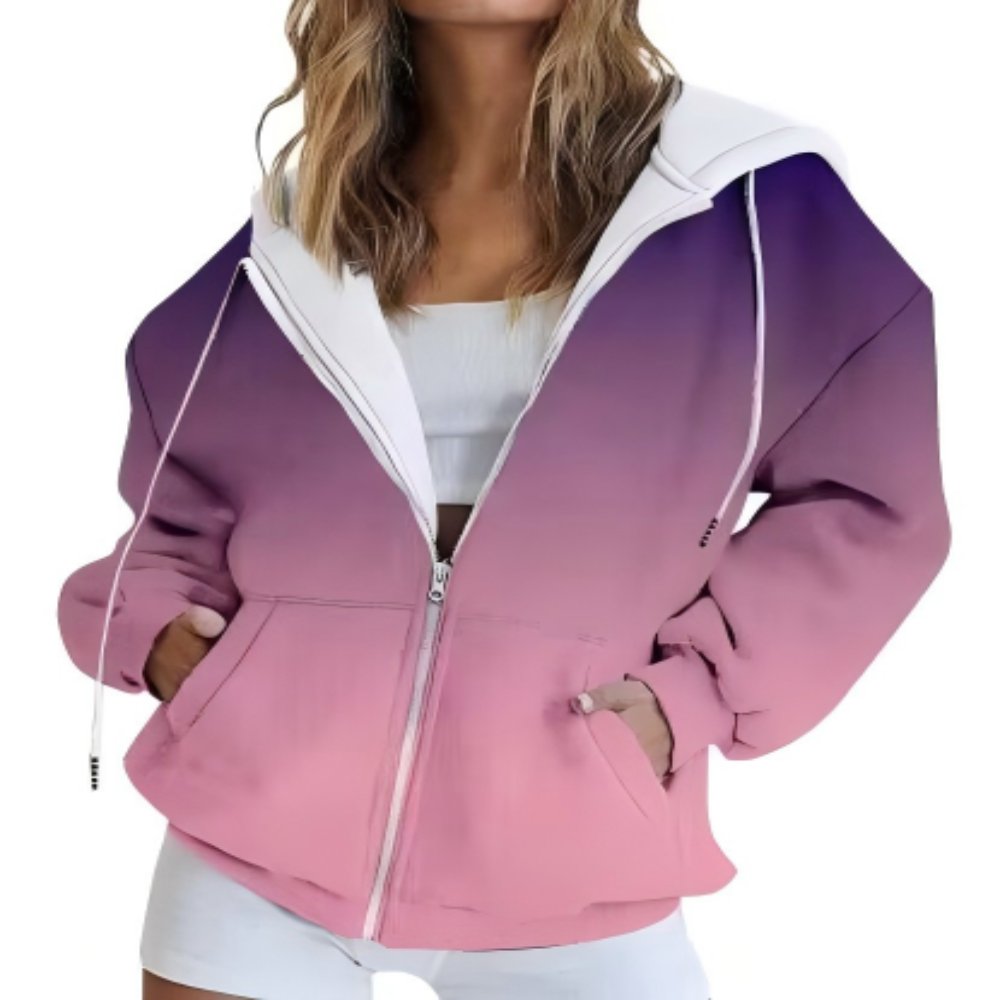
The zip hoodie reference illustrates a different front arrangement. Review its open and closed positions when planning the selected sample. A design that reads as one composition when closed may separate when opened. Ask for the views needed to judge that result, without promising seamless alignment across a closure.
| Garment feature | Layout question | Useful sample view |
|---|---|---|
| Front pocket | Which motif may be interrupted? | Front with pocket edges visible |
| Zip opening | What should read when open or closed? | Both selected closure positions |
| Hood and drawstrings | Which areas become covered? | Back with hood down and ordinary front view |
Review the hood and drawstrings in ordinary positions
Include a back view with the hood down and a separate view of the hood itself. Decide whether any important element on the upper back would be covered. Request a view of the drawstrings in their normal resting position on the front. These simple references reveal visibility questions that may not appear in a flat artwork proof.
If the customer wants artwork on more than one garment area, identify each area separately. Show the intended direction and which view should carry the main composition. Keep these instructions tied to the same file revision. Do not assume that a front approval also approves the hood, sleeves or back of the item.
Use the sample to resolve panel relationships
Review the actual sample with its selected size and garment identifier. Photograph the front, back and side, keeping the relevant seams and openings visible. Note a specific observation when a motif moves behind a seam or becomes unclear near a pocket. Ask for a response to that location rather than writing that the overall print looks wrong.
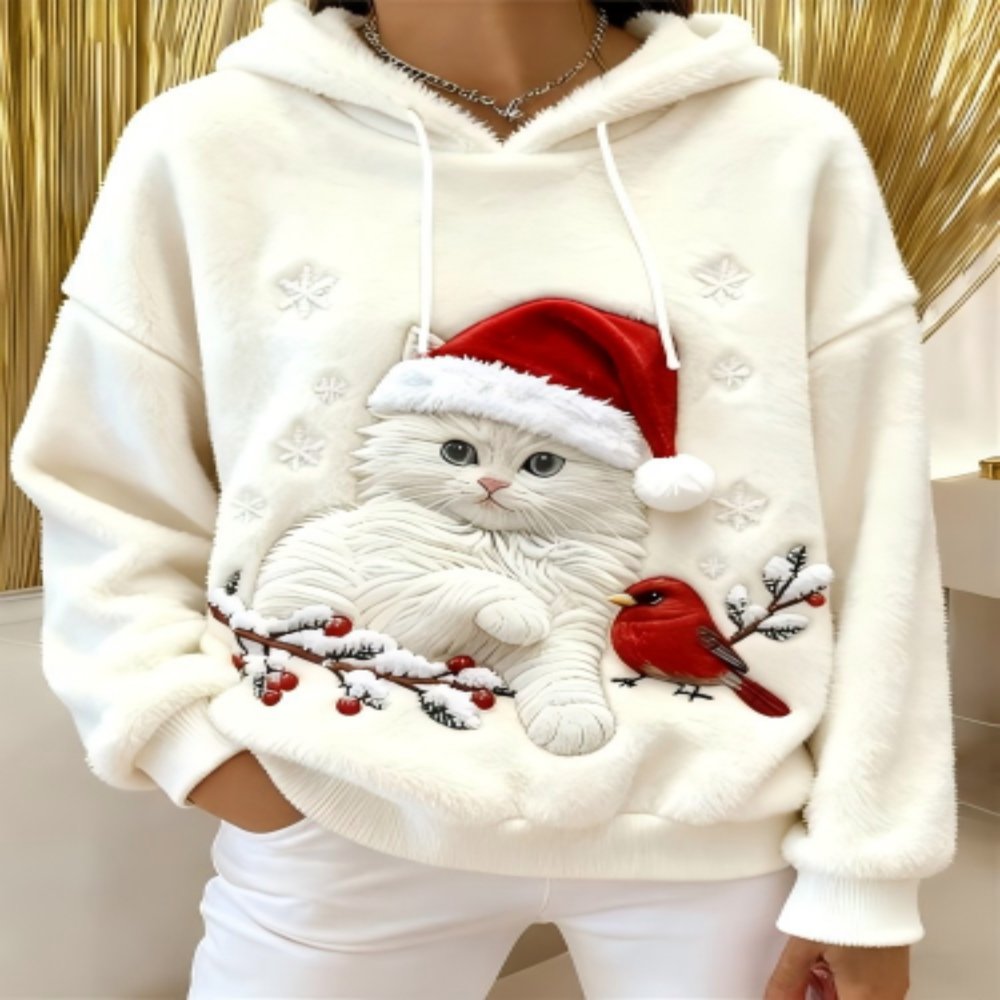
The drop-shoulder hoodie catalogue reference provides another decorated silhouette. Its image supports discussion of the front composition, but the selected shoulder and sleeve layout should be confirmed on a physical sample. A change in garment shape should trigger a review of the artwork relationship instead of an automatic transfer of the earlier layout.
Freeze one garment and artwork revision together
Collect the selected style, marked garment views, artwork revision and resolved sample comments in one approval package. Keep unconfirmed requests separate from accepted details. If the buyer changes the pocket arrangement, opening or garment cut, identify that change alongside the artwork so a later sample does not combine incompatible references.
Send the package through Xiangrong contact and request confirmation of the options for the exact selected garment. Use the custom apparel article hub for broader assortment planning. Keep material information, production-process questions and any performance evidence outside the artwork approval decision until the supplier supplies the relevant details for that version.
Frequently Asked Questions
Can a pullover layout be used unchanged on a zip hoodie?
Review the new front arrangement first. A zip opening and different pocket layout can change which parts of the composition remain visible.
Does a catalogue image prove exact pattern alignment?
No. Specify the intended relationship and ask what can be achieved on the chosen garment. Review the response and sample before approval.
Should the hood be included in the artwork record?
Yes, when its position affects visibility or it carries artwork. Keep its views and instructions distinct from the front and back approvals.
What should be kept for a repeat design?
Retain the exact garment reference, file revision, marked views and resolved comments. Recheck the relationship if the garment construction or selected cut changes.